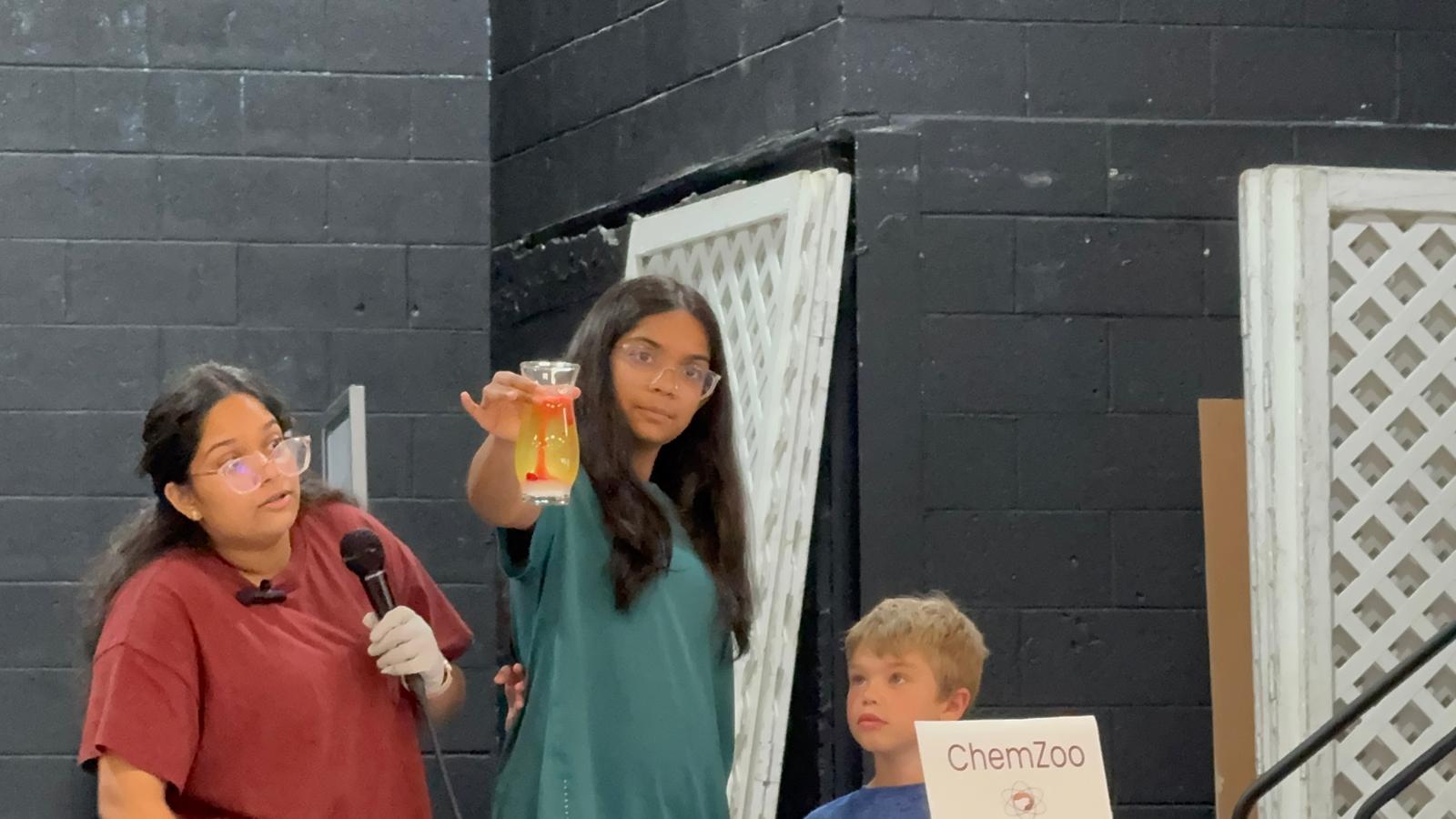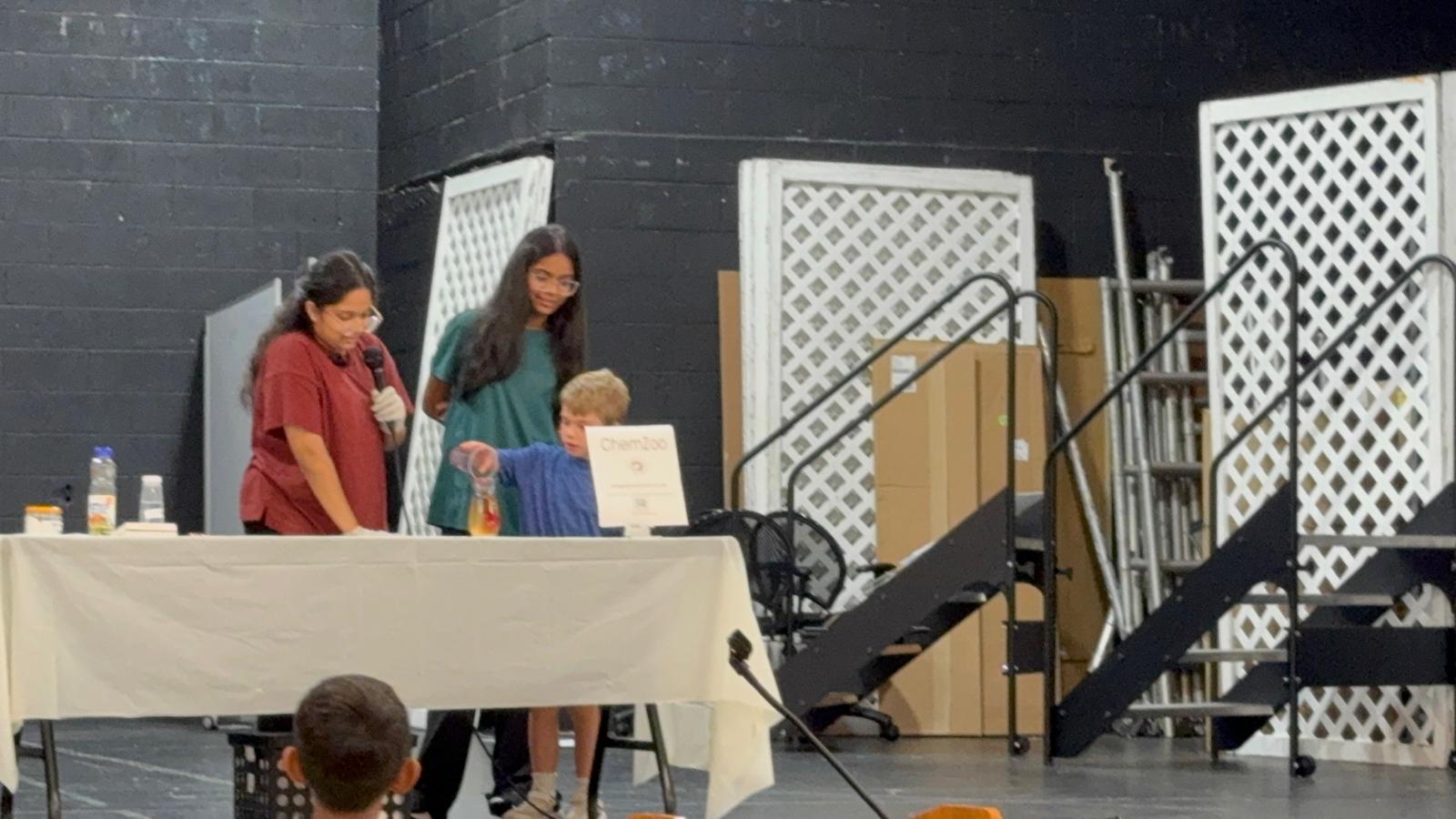

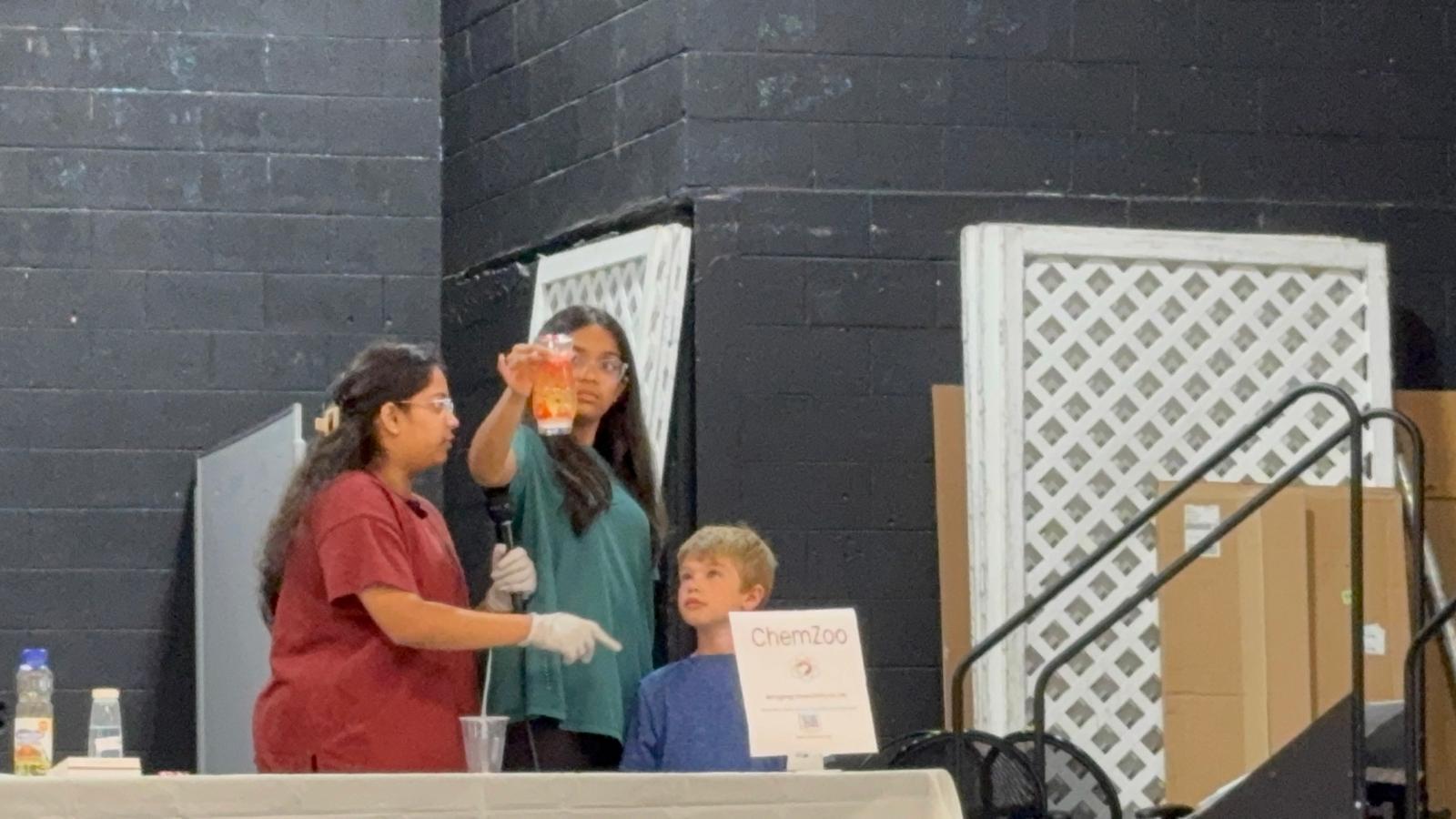
Feel the Heat With Lava Lamps!
July 22, 2025Anushka Patchigolla
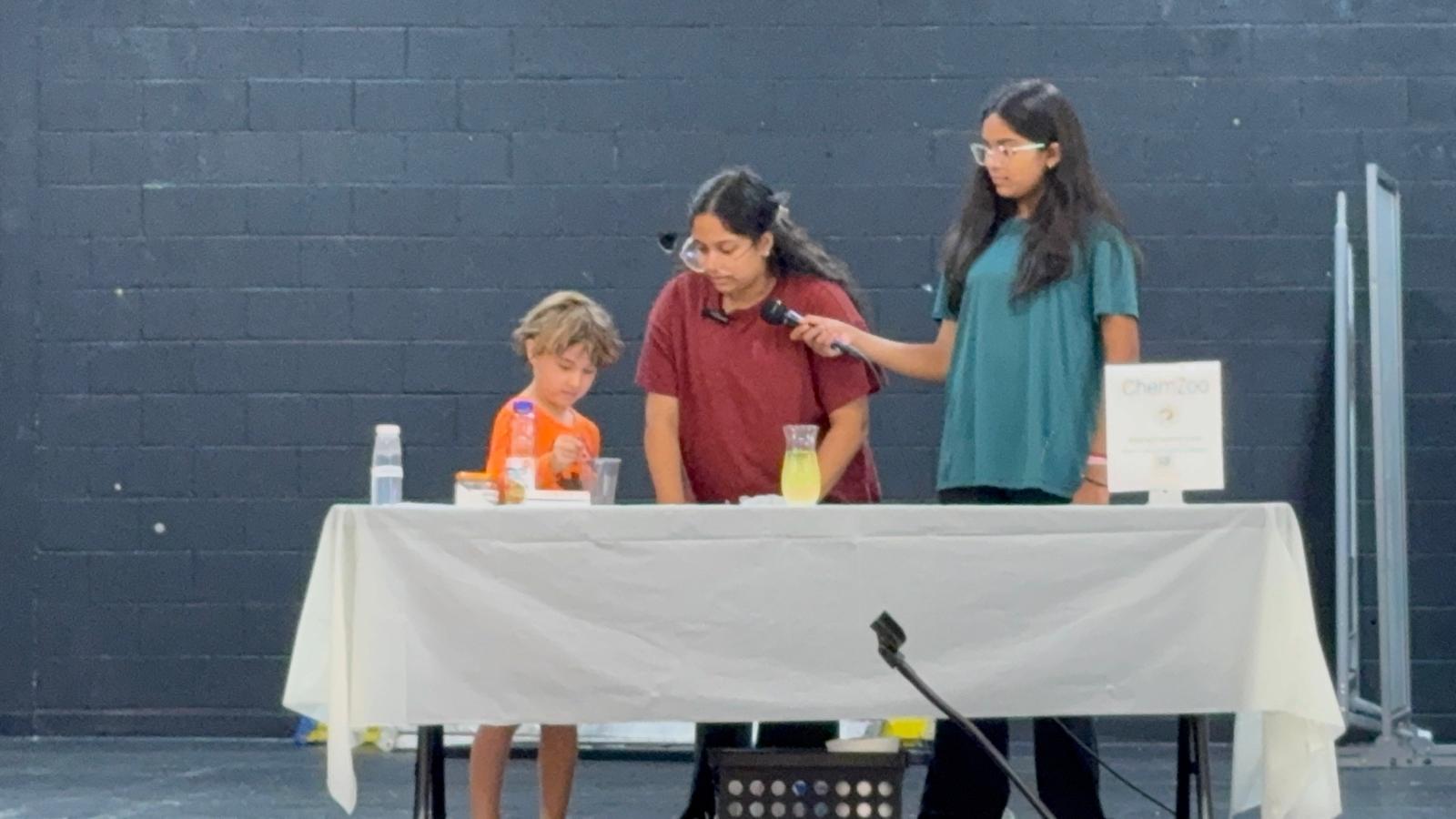
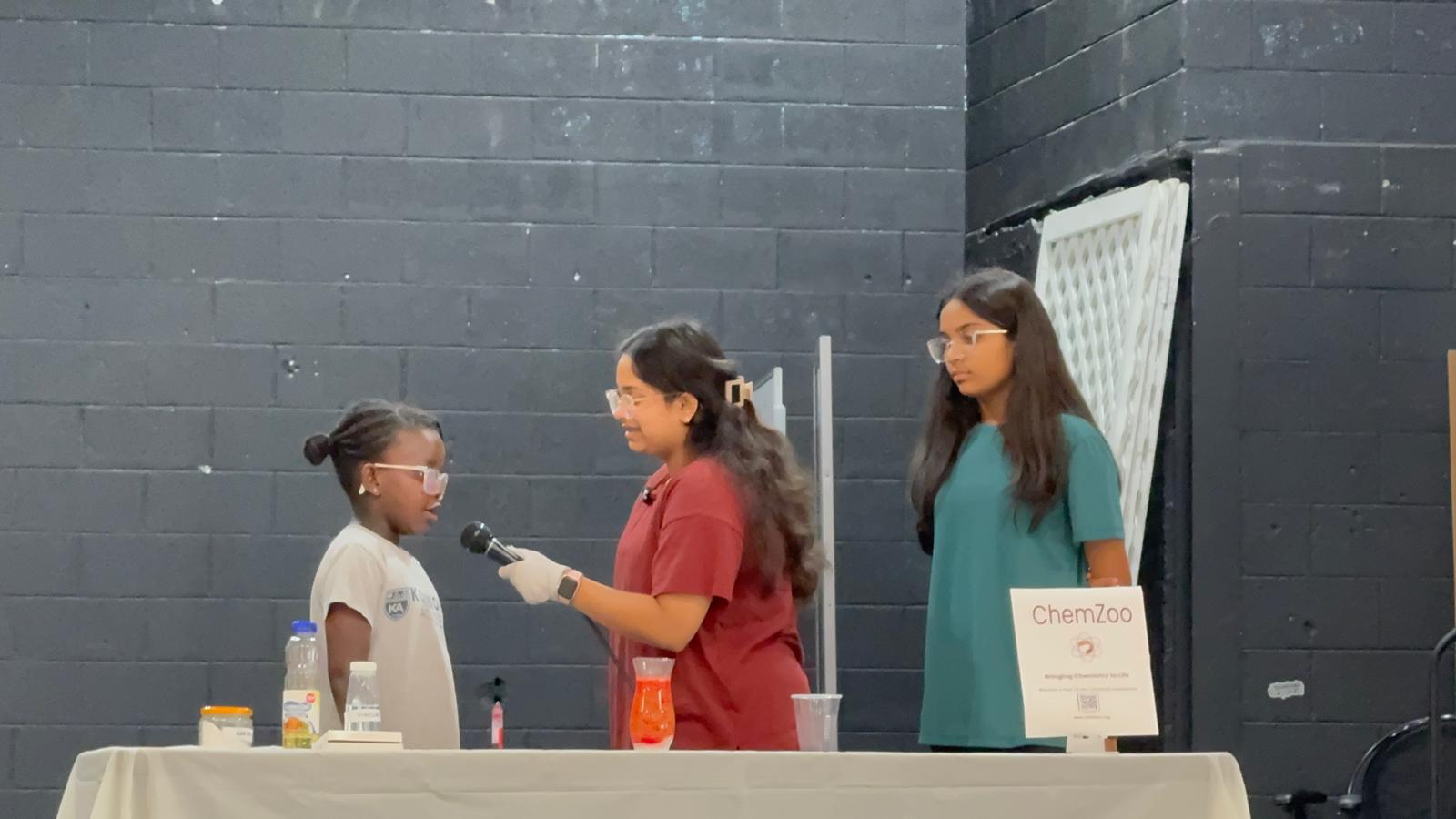
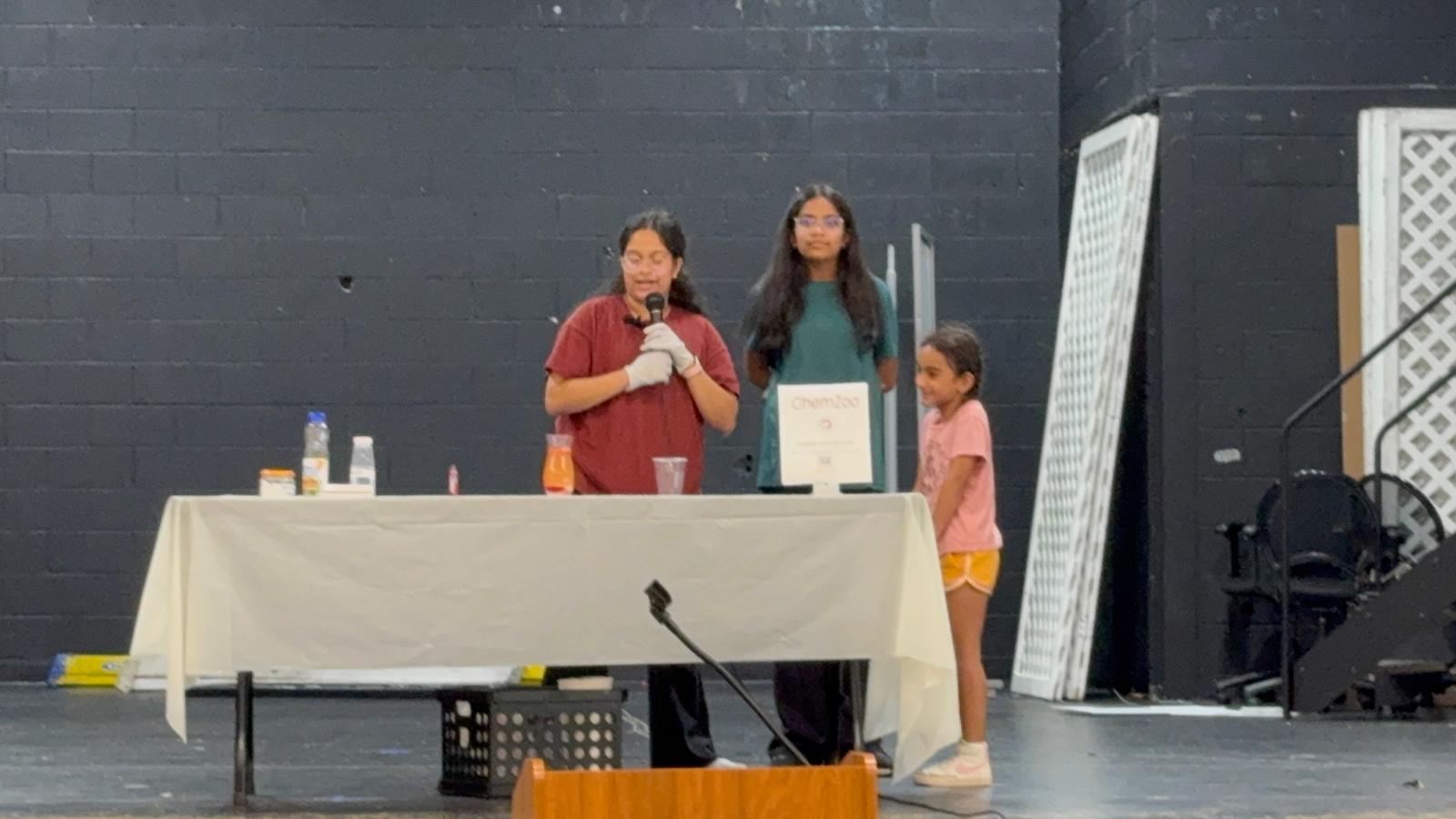
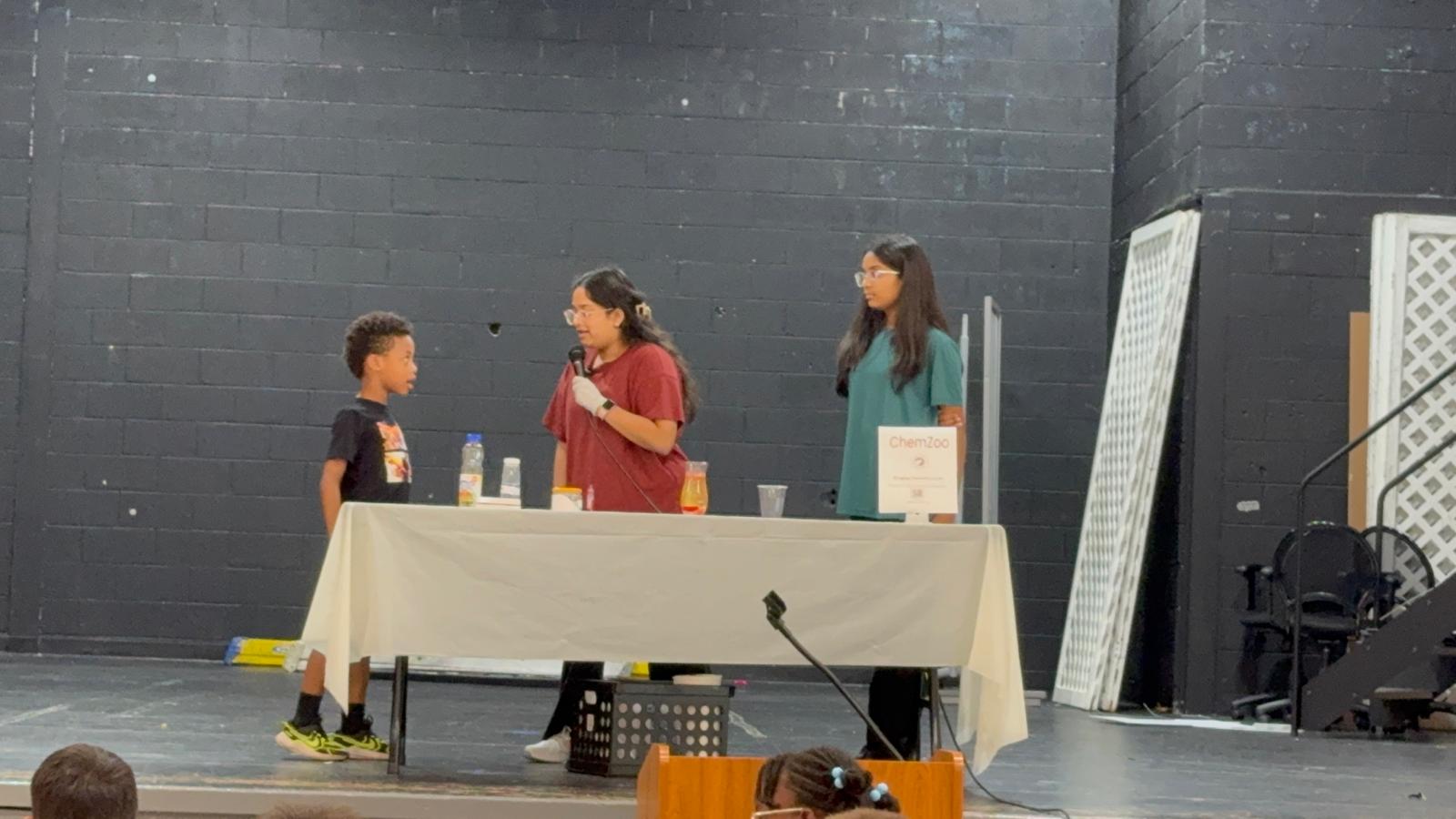
We were back with a live demonstration, and students were so excited to see the “science show” for the fourth time with a new experiment! They connected the baking soda vinegar balloon experiment to this one!
Here’s what the students learned:
Acid-Base Reactions: Students learned about the classic chemical reaction between baking soda (a base) and vinegar (an acid). When combined, they produce carbon dioxide gas, which forms bubbles. These bubbles attach to the colored vinegar at the bottom of the lamp and carry it upward through the oil, just like lava!
Density and Immiscibility: Students also observed how oil and vinegar don’t mix. This is because vinegar is denser and polar, while oil is less dense and non-polar, causing the vinegar to sink to the bottom. When the reaction happens, bubbles of gas lift the dense liquid upward, creating the mesmerizing “lava lamp” effect. Once the bubbles pop, the vinegar sinks again, restarting the cycle!
Stay tuned for more experiments, and if you want to be a part of ChemZoo, sign up to be a chapter director or a volunteer in your state. ChemZoo is all about making science accessible and fun, because our generation needs more scientists.