
Bubbly Balloon Chemistry
July 10, 2025
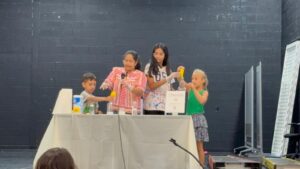
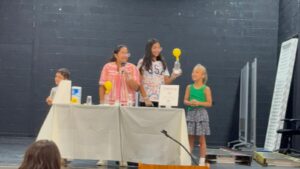
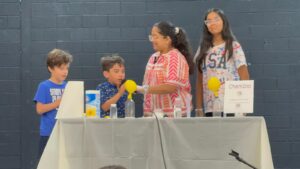
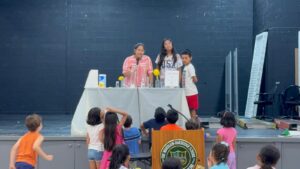
On Tuesday, July 10th, we returned back to the Wardlaw-Hartridge School, to conduct a baking soda vinegar balloon experiment!
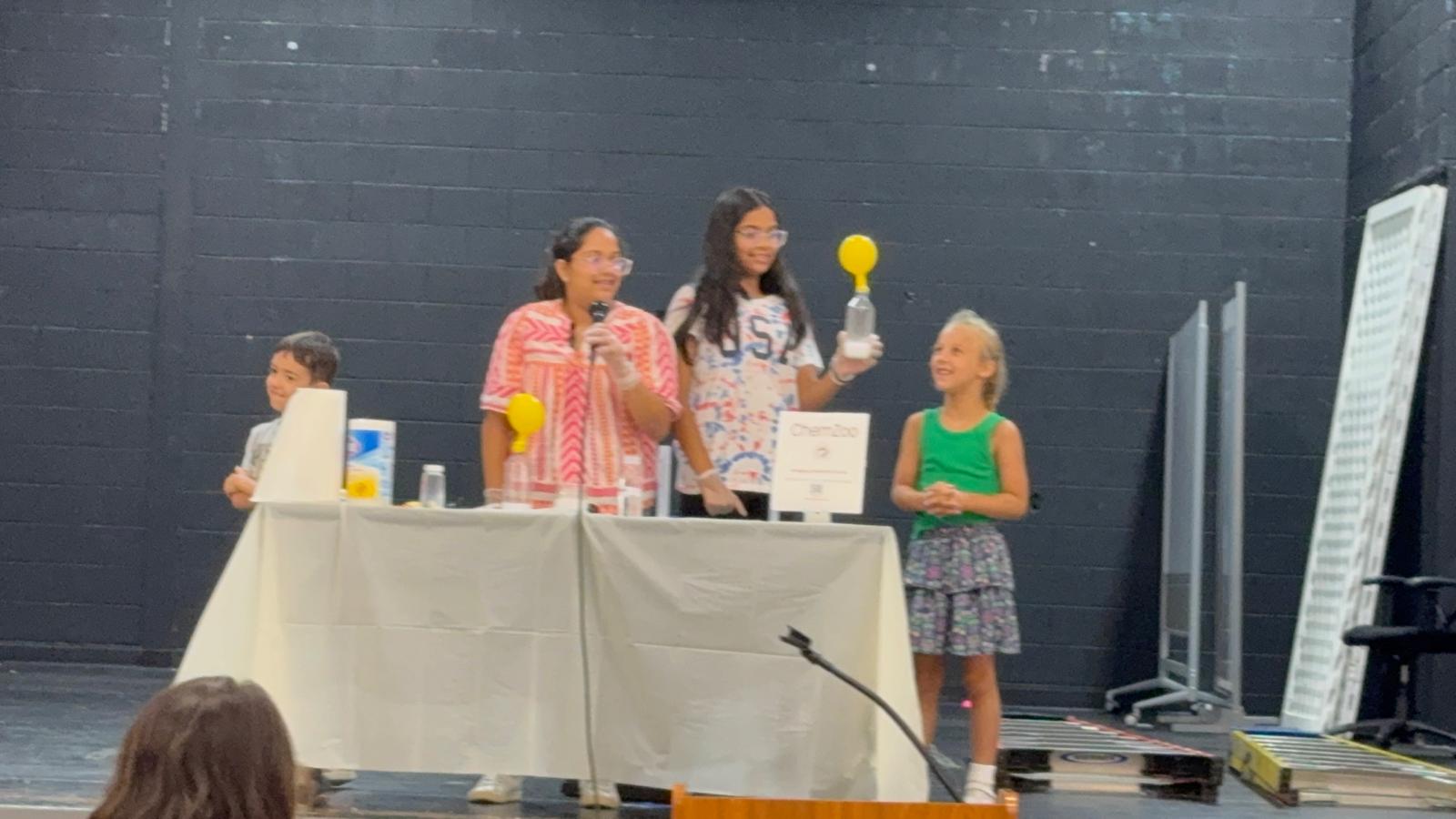
Again, we did a live demonstration, instead of students doing their own experiments. Students were so excited to see the “science show” back again with a new experiment! They learned about acid-base reactions, and they saw how this reaction between baking soda and vinegar could inflate a balloon!
Here’s what the students learned:
Acid-Base Reactions: When baking soda (a base) and vinegar (an acid) mix, they undergo a chemical reaction that produces carbon dioxide gas, water, and sodium acetate. The carbon dioxide gas creates fizzing and bubbles, and in our experiment, it’s what inflated the balloon!
Gases: The students learned that the byproduct of the baking soda-vinegar reaction is carbon dioxide. The carbon dioxide has nowhere to go, as the opening of the bottle is sealed by the balloon, so it inflates it.
The students were so excited, and loved seeing the final results! They were ready to try out this experiment at home, and the smiles on their faces were worth it. They were really curious as well, asking questions like, “Why baking soda and vinegar? Why can’t we use other materials?”, “Why does the balloon inflate?”, and “How come the balloon doesn’t pop?”. One kid even said to me, “I love science!” This enthusiasm inspires us to keep hosting sessions!
Stay tuned for more experiments, and if you want to be a part of ChemZoo, sign up to be a chapter director or a volunteer in your state. ChemZoo is all about making science accessible and fun, because our generation needs more scientists.